What Is the Purpose of a Book Review
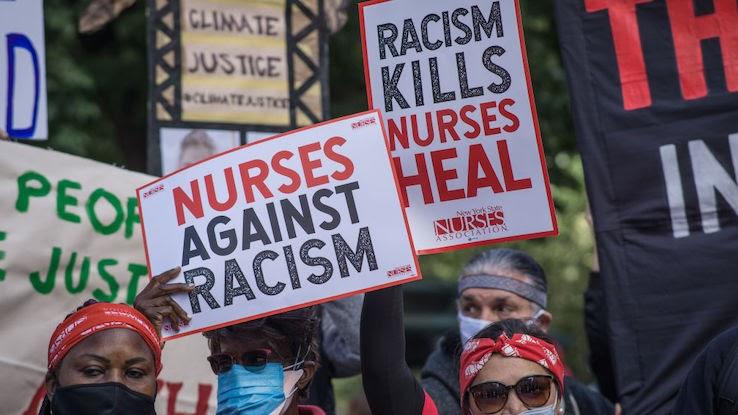
On Nov xvi, 2020, the American Medical Clan (AMA) officially designated racism a public health threat. Equally the country'southward largest group of physicians and medical professionals, the AMA aims to promote the "betterment of public wellness," and it institute that racism results in major discrepancies in the quality of care white people and people of color receive. This announcement is a meaningful one in large function considering it's official recognition from a respected leader at the acme level of the healthcare industry. And it'due south coming from the level where, when changes are made, there's greater potential for far-reaching, positive shifts that could more thoroughly gainsay the historic marginalization of people of color and their treatment in the healthcare sphere.
During a twelvemonth when we've had the privilege of witnessing what quickly grew into the largest ceremonious rights motility in American history — a movement that's seen millions of people come together to demand deep, lasting alter and racial justice — many of usa have realized the importance of actively working to combat racism in all forms. In doing so, it'southward essential that we take the fourth dimension to learn about the roles order'due south biggest institutions play in impacting the lives of people of colour.
The AMA is 1 of these institutions, and its recent announcement could help bulldoze long-overdue change. Yes, it'll take fourth dimension to begin implementing and facilitating policies that'll lead to those changes. But equally that procedure finds its footing, information technology'south important to gain a deeper understanding of the potential these changes have, along with how the AMA intends to pursue them.
Racism Has Long Been Responsible for Negative Wellness Outcomes
Why is it such a big stride for the AMA to make this argument in the kickoff identify? Information technology'southward a potentially substantial try to correct the long-term, historical inequalities that have affected people of colour's access to healthcare and determined the poorer wellness outcomes they feel as a consequence of treatment. Discriminatory attitudes in the medical customs — along with overarching ideas about how a person's race could impact their health — proceed to negatively influence the care unlike groups receive. In improver to implicit bias, overtly racist ideas that are deeply ingrained in healthcare as a system put people of color at greater chance for contracting illnesses and subject them to less effective treatments than those white people receive.

All of this to say, racism can impact a person's mental and physical health in innumerable ways. Black people have lower life expectancies than white and Latinx people overall, and they're at much higher adventure of developing health conditions like high blood pressure, obesity and Blazon ii diabetes. In the Us, Blackness and Indigenous babies are more likely than white infants to die in their first yr of life, and, co-ordinate to the U.S. National Library of Medicine, pregnant parents in those groups are "three to iv times more likely to die from pregnancy-related causes." Additionally, experiencing racism is associated with higher rates of depression, anxiety and other mental health conditions, peculiarly among Asian-American and Latinx populations. And this year, Phonation reports that Black Americans are also dying from COVID-19 at twice the rate of white Americans.
These statistics are striking. But they illustrate the pervasiveness of racist ideas that exist in the medical community, thus creating lower quality of life for people of color. Those college hazard levels aren't due to any biological differences between races — an thought that's been debunked endless times but still persists. Instead, people of color actually receive different medical handling that ends up elevating their risk levels.
"It'due south a holdover from the days of slavery," said Dr. Jennifer Lincoln, an OB-GYN from Portland, Oregon, referencing a fourth dimension when doctors perpetuated incorrect beliefs nearly Black folks' pain tolerance and other physical attributes to justify the dehumanizing treatment of enslaved people. In fact, a 2016 study establish that half of white medical students nonetheless think Black people feel less pain than people of other races, which leads to underprescription of necessary pain medications. That these unfounded and racist ideas have persisted this long demonstrates exactly why at that place's a need for non merely the AMA's declaration only for real activity.
The AMA's Announcement Takes a Holistic Arroyo to Addressing Racism in Healthcare
In June of 2020, the AMA made a pledge in response to the growing protests and calls for sweeping social reform that swelled after the May 25 police force murder of George Floyd. In this document, the medical organization'southward board of trustees committed to take "activity to confront systemic racism and police brutality," which it recognized as urgent public health threats. Also included in the pledge was the AMA's promise to "actively work to dismantle racist and discriminatory policies and practices across all of healthcare" — to intentionally create equitable weather and opportunities so people of color tin can benefit from higher-quality medical care than what they've been receiving.
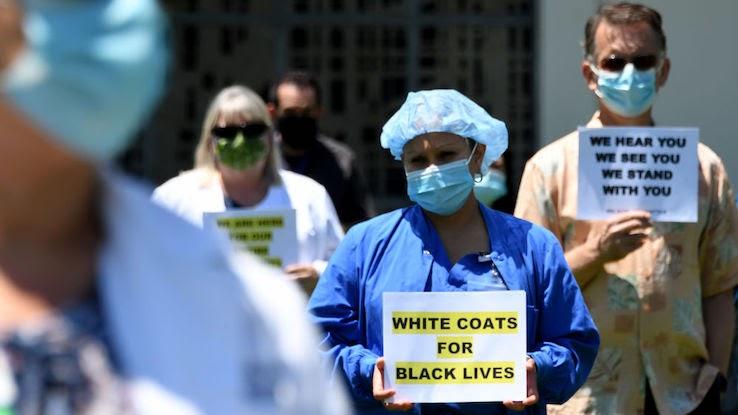
It'southward becoming clearer that this pledge wasn't something performative or a surface-level attempt for the AMA to align itself with a motion but to boost its own reputation. The November statement demonstrates that, due largely to the framework it sets up and the actionable steps information technology outlines for timely implementation. In addition to recognizing that race is a social construct — meaning it's a concept created by people, not something based on biological differences that tin can be medicalized — the statement also provides "a detailed program to mitigate [racism'southward] effects" and "dismantl[eastward] racist and discriminatory policies beyond all of healthcare."
So how does the AMA plan to accomplish this, and what steps will information technology accept? The organization proposes activity on multiple levels. Outset, it plans to encourage structural-level change past advocating for government agencies and nonprofit groups to brainstorm funding more research on the extent of the damage racism causes in healthcare. In addition, it'll push for more thorough inquiry into ways to both repair and foreclose those amercement. The AMA also plans to encourage educational institutions to develop programs that teach medical students about the causes and effects different types of racism have on various groups — along with means to prevent racism's negative wellness furnishings and to improve wellness outcomes for the future.
In addition to using its influence to encourage other entities to take activity, the AMA intends to follow a process its House of Delegates — the grouping's policy-making body — has outlined to lead by example. Included on this listing of steps? The AMA will "identify a gear up of current all-time practices" for healthcare institutions, medical offices and hospitals at universities that brand it easier for these entities to "recognize, address and mitigate the effects of racism on patients, providers" and other populations. Substantially, the organization will create guidelines that give medical professionals on a variety of levels concrete procedures to follow — a sort of roadmap to direct changes and remove barriers to implementing those changes. Finally, the AMA plans to collaborate with a variety of other medical associations to decide which elements of board examinations and medical education programs teach or reinforce racism then that these elements can exist addressed.
Is It Enough to Spark Change?
Of class, the AMA's new recommendations are preliminary, non sweeping. They're somewhat broad, and they seem to involve ample "encouraging" of other entities, which admittedly feels a bit amorphous. But it'due south important to think that this is just the beginning of a process that's going to have fourth dimension. Systemic racism has been entrenched in American healthcare for centuries, and it's not going to vanish right away. Merely the new policies the AMA has presented practise have the potential to propel widespread modify and serve every bit springboards for other organizations.
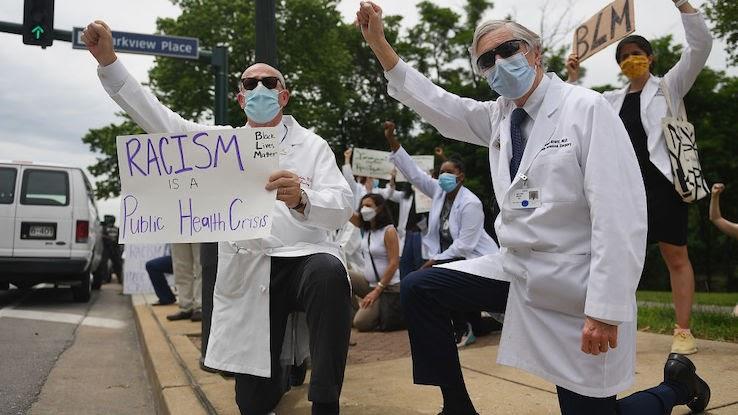
The early general consensus among the medical customs and other healthcare leaders is that the proclamation is a positive footstep. Dr. Ravi K. Perry, the chair of political science at Howard University and a member of the American Lung Association's COVID-19 advisory panel, told The states Today, "I remember it has the potential to exist a game-changer," explaining how "the AMA's annunciation could exist a meaning catalyst in the progress of national racial dialogue and policy development to fight disparities." Speaking to Business Insider, Dr. Jessica Shepherd, a Dallas-based obstetrician and the founder of online health forum Her Viewpoint, noted that "it's important for organizations [to] accept responsibleness for making changes similar these, rather than leaving the onus on individuals," but that she'due south been pleasantly surprised with how far things have come — and how far they might go if other groups continue to do this necessary work.
Dr. Jose Torradas, a doctor of emergency medicine and creator of the bilingual toolkit COVID-nineteen@domicile, took a more cautiously optimistic stance — one that does feel more advisable this early. "Meaningful impact happens when words become action," said Dr. Torradas. "Our asymmetric arroyo to public health…has taken form over decades, and modify won't happen overnight." And he raises an of import point. At this stage — without anything however put into motion aside from a(north admittedly significant) declaration — it remains to be seen what actual lasting changes might stem from the AMA's proposed policies.
Just the official designation of racism as a public health threat in and of itself is a vital footstep. Information technology shows formal, high-level acknowledgement of the life-threatening dangers racist belief systems pose — that leaders are aware something needs to change and are preparing to do something virtually information technology. Information technology shows recognition from the same systemic level that's so long been responsible for perpetuating impairment, the level where modify could have the nearly notable impacts on order. And those notable impacts are needed now more than ever.
Dr. Shepherd sums it upwards well: "If we don't make changes such as the one[south] we're discussing now, then we'll never actually get to the eye of the problem." Things are past reaching a major turning point. And although more fourth dimension is needed to tell if the announcement is what pushes progress around that corner, it's a step in the right direction. Hither'due south hoping that the AMA's new policies are the start of many successful efforts in achieving long-overdue healthcare justice.
Source: https://www.ask.com/culture/racism-public-health-threat?utm_content=params%3Ao%3D740004%26ad%3DdirN%26qo%3DserpIndex
0 Response to "What Is the Purpose of a Book Review"
Post a Comment